.webp)
The Evangelical Diaspora: Getting Out of our Boxes is a raw, honest, and lively discussion between Steve and Greg Ferrand. It is a conversation where Greg shares his story of change and breaking out of boxes that don't fit and beliefs that simply did not work for him any more.
Can you identify?
There are few show notes. But listen well and listen often as this conversation just might become a road map for you to take some steps to deconstruct some boxes--which may be different from Greg's boxes or Steve's boxes but will help you to find the language and love to join in the process of deconstructing boxes you may be finding.
The Pandemic, politics, racial stress, and economic challenge have all required new ways of thinking for all of us. No one gets a pass on not feeling like "something is not right...something is not working any more." We hope this particular podcast will give you something to think about, something to argue with, and some courage to take some steps that await you for a new beginning.
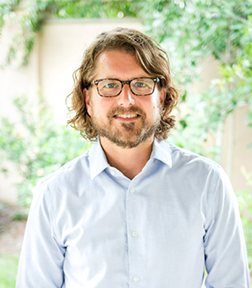
Greg Farrand is the Executive Director at Second Breath Center, a Servant leadership school that focuses on moving beyond mere intellectual understanding of God, faith, and love to actually experiencing them with mind, heart, and body.
Greg attended Reformed Theological Seminary and worked in several unique ministry settings, including as a missionary in Uganda, and in campus ministry. Greg also served as founder and lead pastor of Spring Garden Community Church and as co-director of Selah Spiritual Formation, a nonprofit committed to facilitating spiritual direction and retreats.
Greg spent most of his early life living in Japan and Taiwan. He now lives in Greensboro, NC with his wife Beth, who works as a spiritual director. They have three grown sons. In his free time, Greg enjoys hiking and being in nature.
But who are you, O man, to answer back to God? Will what is molded say to its molder, “Why have you made me like this?” Romans 9:20
Spiritual transformation is circular, unpredictable, and sometimes feels like we’re falling backwards.
__
Life isn’t easy. Neither is spiritual transformation. Like clay whirling on the potter’s wheel, it’s messy. Dirty water. Lumpy clay. Drippy hands. Sometimes the clay slumps, and the potter catches and reshapes it. Sometimes shaping the vessel takes more time than imagined. The potter demonstrates that spiritual transformation is never clean or clear-cut. Spiritual formation is not a linear, straight or rigid process. It’s messy, always.
The reforming process is not linear or sequential in order. It’s more of an art form than an exact science. We can’t predict or control everything that will happen. This is why we need to press beyond our minds and rational thinking to envision spiritual formation as a process of being shaped and reshaped throughout our lives. Artwork in progress if you will.
We would really love how-to steps that manage our lives and lead us neatly out of our troubles. But when we get fired, the doctor diagnoses cancer, a child uses drugs, a marriage fails, or we’re stuck in an addiction, lists and steps can fail us and our faith. Consequently, we need to accept that spiritual transformation is circular, unpredictable, and sometimes feels like we’re falling backwards instead of stepping forward. It can feel like a mess, but God the Potter holds us.
No potter works with clean hands. He touches the messy clay, ridding the impurities and reforming its shape. It is the same way when God works in us. We bring a messy life—our impure clay—to the transformation process. The Potter works in the mess with soiled hands oozing with wet, soft clay.
Could it be that the Potter thrives on the chaos of the whirling wheel? Could it be that He loves messes? The Potter places His hands on slumping clay and turns it into a masterpiece. We bring the trouble. The Potter works the transformation.
For Reflection: Consider that the Potter may love messes. What would it look like for you to accept your mess? Allow yourself to feel His love for you, for your messes.
We depend on your support to carry on the ministry of Potter's Inn. Each of our ministry staff also raise their own financial support for salaries to serve with our team.
.png)